

Sustainable and Green Q-Commerce: Pioneering Eco-Friendly Innovation
Yashh Jhawar
Intern - Investment & Research
The rapid evolution of consumer behavior in India has given rise to quick commerce, a sector promising the delivery of goods in as short as 10-30 minutes. This model is changing the retail landscape, especially in urban areas, where the demand for speed and convenience has become paramount. Recent researches in India say the quick-commerce market is going to reach size nearly at $3.34 billion in 2024, while hitting almost at $9.95 billion by 2029. Its compound annual growth rate in the estimated period will stand above 4.5%. As the demand for rapid delivery services increases, companies are leveraging electric vehicles (EVs), artificial intelligence (AI), and drone technology to enhance their operational efficiency and sustainability. This article explores these key trends shaping the future of quick commerce.
Electric Vehicles: A Sustainable Solution
Electric vehicles are becoming integral to the logistics strategies of quick commerce companies. The rise of quick commerce has made electric vehicles (EVs) a top choice for last-mile delivery, offering cost efficiency and sustainability. EVs cost 30-40% less to operate than internal combustion engine equivalents, and government incentives make fleet electrification more accessible. By 2025, EVs are expected to make up 25% of last-mile delivery fleets.
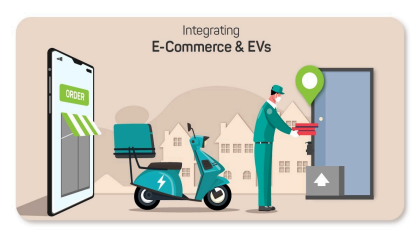
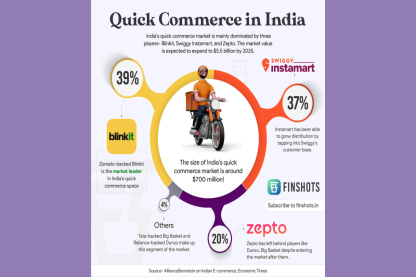
Key players are leading this shift. Zepto, founded in 2021, delivers groceries within 8-10 minutes via over 100 micro-warehouses in cities like Mumbai and Bangalore. Blinkit aims to transition nearly all deliveries to EVs by 2030, enhancing efficiency while supporting sustainability. Swiggy Instamart, part of Swiggy’s platform, is also aligning with this trend, planning to integrate EVs into its operations. These examples highlight how EVs are transforming quick commerce logistics. With the quick commerce market projected to reach $5.5 billion by 2025, the integration of EVs not only reduces carbon emissions but also lowers operational costs associated with traditional fuel vehicles.
Conclusion
To sum it all up, the future of quick commerce delivery is being shaped by the integration of electric vehicles, AI-driven tracking systems, and drone technology. As businesses embrace these innovations, they can enhance operational efficiency while meeting the growing demands for speed and sustainability in last-mile logistics. By leveraging these technologies effectively, businesses can not only improve their service offerings but also contribute positively to environmental goals and consumer satisfaction. As the quick commerce sector continues to evolve, the combination of these advancements will play a pivotal role in shaping its future landscape.